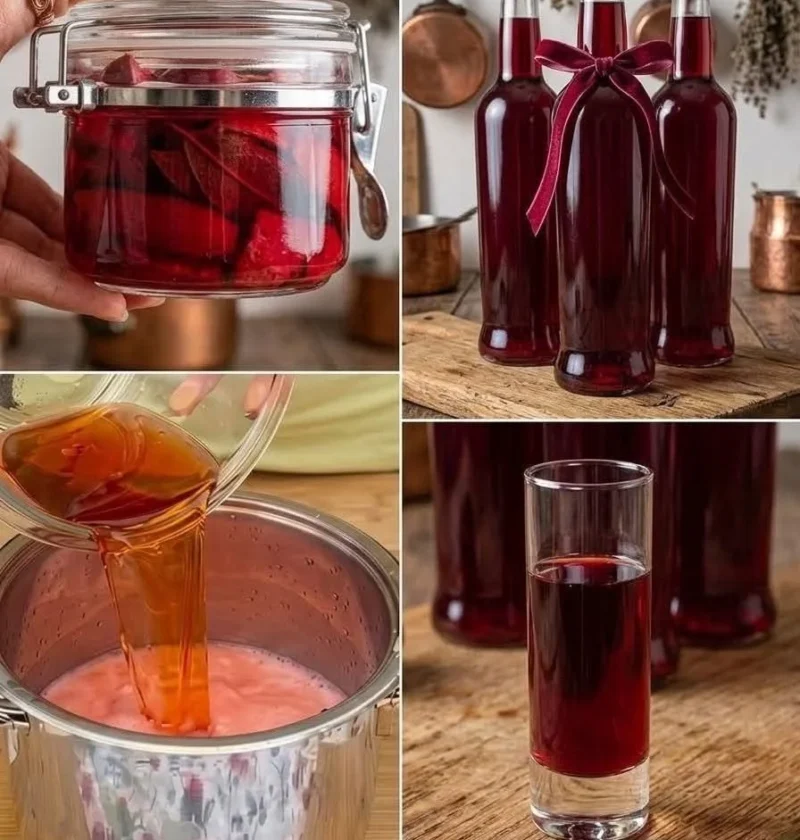
There is something special about making your own fruit syrup at home, especially when fresh pomegranates are involved. Their beautiful ruby-red seeds are naturally juicy and full of flavor, making them perfect for creating a delicious homemade syrup.
This Homemade Pomegranate Syrup combines fresh pomegranate juice, granulated sugar, and a little lemon juice to create a thick, glossy mixture with a wonderful balance of sweetness and tartness. It has a deep red color, a rich fruity aroma, and a smooth consistency that makes it a lovely addition to many everyday recipes.
The best part is that you don’t need expensive ingredients, special equipment, or professional cooking skills. With just a saucepan, blender, strainer, and a little patience, you can prepare this flavorful syrup right in your own kitchen.
Use it to sweeten refreshing drinks, drizzle over pancakes, add flavor to yogurt, or finish your favorite desserts. You can even pour it into a decorative glass bottle and share it as a thoughtful homemade food gift.
If you enjoy fresh fruit recipes and homemade kitchen creations, this simple pomegranate syrup is definitely worth trying! ❤️
🛒 Ingredients You’ll Need
Preparation time: 15 minutes
Cooking time: 30–40 minutes
Total time: Approximately 50–60 minutes
Yield: Approximately 1–1½ cups of syrup, depending on reduction
- ❤️ 4 cups fresh pomegranate seeds: Extracted from approximately 3–4 large ripe pomegranates.
- 🍚 1 cup granulated sugar: Adds sweetness and helps create the syrup’s thick consistency.
- 🍋 2 tablespoons fresh lemon juice: Adds a bright citrus flavor and balances the sweetness.
👩🍳 Step-by-Step Instructions
Step 1: Prepare the Pomegranates
Start by washing the pomegranates under cool running water to remove any dirt from their outer skin. Pat them dry with a clean towel.
Cut each pomegranate carefully into sections. Remove the red seeds, also known as arils, and place them in a large bowl.
Separate the seeds from any pieces of white membrane because the membrane can add an unpleasant bitter taste to the finished syrup.
Take your time during this step to make sure you have clean, fresh pomegranate seeds.
Step 2: Extract the Fresh Pomegranate Juice
Place the pomegranate seeds into a blender. Pulse them briefly a few times to release their juice.
Avoid blending continuously at high speed because crushing the hard inner seeds too much can make the juice bitter.
Pour the mixture through a fine-mesh strainer placed over a large bowl. Use the back of a spoon to gently press the crushed seeds and extract as much juice as possible.
Discard the leftover pulp and seeds.
You should have approximately 2 cups of fresh pomegranate juice, although the amount can vary depending on the fruit.
Step 3: Combine the Ingredients
Pour the freshly extracted pomegranate juice into a medium-sized saucepan.
Add the granulated sugar and fresh lemon juice. Stir everything together using a wooden spoon or heat-resistant spatula.
Allow the mixture to warm over medium heat, stirring occasionally until the sugar dissolves.
At this stage, the mixture should look like a bright red fruit juice with a slightly sweet citrus aroma.
Step 4: Bring the Mixture to a Gentle Boil
Continue heating the mixture until small bubbles begin appearing across the surface.
Once it reaches a gentle boil, reduce the heat to low.
Avoid keeping the mixture at a vigorous boil because excessive heat can cause the syrup to reduce too quickly or stick to the bottom of the saucepan.
Step 5: Simmer Until Thickened
Allow the mixture to simmer uncovered for approximately 25–40 minutes, stirring every few minutes.
As the water evaporates, the liquid will gradually become darker, richer, and thicker.
Keep a close eye on the saucepan, especially during the final 10 minutes of cooking. Sugar-based mixtures can burn if left unattended.
The exact cooking time depends on the width of your saucepan, the amount of juice, and the heat level.
Step 6: Check the Consistency
To check whether the syrup is ready, dip a clean spoon into the mixture and allow a little syrup to cool on the spoon.
It should lightly coat the back of the spoon and run off more slowly than ordinary juice.
Remember that the syrup will become thicker as it cools. Do not wait until it becomes extremely thick in the saucepan, or it may turn sticky or overly firm once refrigerated.
For a more accurate check, place a small amount on a chilled plate and allow it to cool briefly. This helps you judge the final consistency without overcooking the entire batch.
Step 7: Cool the Syrup
Turn off the heat and carefully remove the saucepan from the stove.
Allow the syrup to cool for approximately 20–30 minutes, or until it is no longer steaming heavily.
Avoid handling the hot syrup directly because concentrated sugar mixtures can cause serious burns.
Step 8: Transfer to a Glass Jar
Pour the cooled syrup into a clean, dry glass jar or bottle using a small funnel.
Make sure the container has a tight-fitting lid. Close it securely and place it in the refrigerator.
Your homemade pomegranate syrup is now ready to enjoy!
❤️ Why You’ll Love This Homemade Pomegranate Syrup
- Fresh fruit flavor: Made with real pomegranate juice rather than artificial fruit flavoring.
- Beautiful natural color: Fresh pomegranate juice gives the syrup its attractive ruby-red appearance.
- Sweet and tangy taste: Sugar balances the natural tartness of the fruit, while lemon adds a refreshing citrus note.
- Simple ingredients: You only need three basic ingredients.
- Versatile use: It works beautifully in drinks, desserts, breakfast dishes, and homemade sauces.
- Easy to customize: You can adjust the sweetness and thickness according to your preference.
- Homemade preparation: You control the ingredients and can avoid unnecessary artificial colors and flavorings.
🍹 Delicious Ways to Use Pomegranate Syrup
One of the best things about this recipe is how many different ways you can enjoy it.
1. Add It to Refreshing Drinks
Mix one or two teaspoons of pomegranate syrup into a glass of cold water or sparkling water. Add ice cubes and a squeeze of lemon for a refreshing homemade drink.
You can also use it in mocktails and fruit-based beverages.
2. Drizzle Over Pancakes and Waffles
Replace your usual topping with a small drizzle of pomegranate syrup. Its sweet and tangy flavor pairs nicely with pancakes, waffles, and French toast.
3. Mix It Into Yogurt
Stir a little syrup into plain yogurt for a fruity flavor. You can also layer it with fresh fruit, granola, and nuts to create a simple breakfast bowl.
4. Use It on Desserts
Add a small amount over cheesecake, ice cream, pudding, or homemade cakes. The ruby-red color makes desserts look especially attractive.
5. Make a Simple Salad Dressing
Combine a teaspoon of pomegranate syrup with olive oil, lemon juice, and a little mustard to create a sweet-and-tangy dressing for salads.
6. Add Flavor to Homemade Sauces
A small amount can be added to suitable savory sauces, marinades, or glazes. It works particularly well with ingredients that balance sweet and tangy flavors.
🌿 Helpful Tips for the Best Results
Choose ripe pomegranates: Look for fruits that feel heavy for their size. They often contain plenty of juicy seeds.
Use fresh lemon juice: Freshly squeezed lemon juice provides a bright flavor that works especially well with pomegranate.
Avoid crushing the seeds too much: Blend briefly to release the juice without grinding the hard inner seeds excessively.
Use a wide saucepan: A wider pan allows more liquid to evaporate and may reduce the cooking time.
Stir regularly: Stirring helps prevent the sugar from sticking to the bottom of the pan.
Watch the syrup carefully: It can thicken quickly toward the end of cooking.
Allow it to cool before judging: The syrup becomes thicker as its temperature decreases, so avoid over-reducing it.
Adjust the sweetness: If your pomegranates are naturally sweet, you may prefer using slightly less sugar.
🍎 Easy Recipe Variations
Want to give your homemade syrup a different flavor? Try one of these simple ideas.
- Cinnamon Pomegranate Syrup: Add one small cinnamon stick while simmering. Remove it before transferring the syrup to a jar.
- Ginger Pomegranate Syrup: Add a few thin slices of fresh ginger for a warm, slightly spicy flavor. Strain them out before storage.
- Orange Pomegranate Syrup: Add a little fresh orange juice for a sweeter citrus taste. Remember that additional liquid may change the cooking time.
- Vanilla Pomegranate Syrup: Stir in a small amount of vanilla extract after removing the saucepan from the heat.
- Less-Sweet Version: Reduce the sugar according to your taste, keeping in mind that the syrup may have a thinner consistency and a shorter storage life.
🧊 Storage Instructions
Proper storage is important because homemade fruit syrups do not have the same controlled preservation process as commercially manufactured products.
- Use a thoroughly cleaned and dried glass jar.
- Transfer the syrup into the jar after it has cooled.
- Keep the container tightly covered.
- Store it in the refrigerator at 4°C (40°F) or below.
- Always use a clean spoon when taking syrup from the jar.
- Check for unusual smells, mold, fermentation, or other signs of spoilage before use.
- For this homemade version, a conservative approach is to use it within approximately 1–2 weeks.
The exact storage life depends on the final sugar concentration, acidity, preparation method, and cleanliness of the container. Do not assume that homemade syrup is shelf-stable. For longer storage, freeze it in suitable small portions.
📊 Estimated Nutrition Information
The following values are approximate and will vary depending on the pomegranates, sugar quantity, and final amount of syrup produced.
Estimated nutrition per 2-tablespoon serving:
| Nutrient | Approximate amount |
|---|---|
| Calories | 65–80 kcal |
| Carbohydrates | 16–20 g |
| Total sugars | 15–19 g |
| Protein | 0–0.5 g |
| Total fat | 0 g |
| Fiber | 0 g |
| Sodium | 0–2 mg |
Note: Most of the fiber from the original pomegranate seeds is removed when the juice is strained. The syrup also contains added sugar, so it is best enjoyed in moderate portions.
❓ Frequently Asked Questions
1. Can I make pomegranate syrup without a blender?
Yes. You can use a manual citrus press or another suitable juicing method. You can also gently crush the seeds with a potato masher and strain the juice through a fine-mesh strainer.
2. Why does my pomegranate syrup become very thick after cooling?
This usually happens when too much water evaporates during cooking. Sugar becomes more concentrated as the liquid reduces, making the syrup thicker. Remember that it will thicken further as it cools.
3. Can I use bottled pomegranate juice?
Yes. Unsweetened bottled pomegranate juice can be used instead of freshly extracted juice. Check the label to make sure it does not already contain added sugar, and adjust the recipe accordingly.
4. Can I reduce the amount of sugar?
Yes. You can use less sugar if you prefer a more tart flavor. However, sugar contributes to the syrup’s texture and preservation characteristics, so reducing it can change the consistency and storage life.
5. How do I know when the syrup is ready?
The syrup should lightly coat the back of a spoon and appear thicker than ordinary fruit juice. It will become more concentrated as it cools, so avoid cooking it until it looks extremely thick.
6. Can I freeze homemade pomegranate syrup?
Yes. Allow it to cool completely and transfer it into a freezer-safe container. Leave a little room at the top for expansion. Thaw it in the refrigerator before using.
7. Is homemade pomegranate syrup healthy?
It is made with real fruit juice, which provides some natural plant compounds. However, the recipe also contains added sugar, and straining removes most of the fruit’s fiber. Enjoy it as a flavorful topping or sweetener rather than treating it as a health supplement.
8. Can I use this syrup in tea?
Yes. Add a small amount to warm or iced tea for a fruity, sweet-and-tangy flavor. Adjust the quantity according to your taste.
❤️ Final Thoughts
Homemade Pomegranate Syrup is a simple and delicious way to turn fresh pomegranates into something special. With just three basic ingredients, you can create a beautiful ruby-red syrup that adds fruity flavor to drinks, breakfast dishes, desserts, and homemade sauces.
The recipe is easy to customize, requires no complicated equipment, and gives you complete control over the sweetness and flavor.
Make a batch when fresh pomegranates are available, store it properly in the refrigerator, and enjoy a little sweet and tangy goodness whenever you need it!
Happy cooking! ❤️