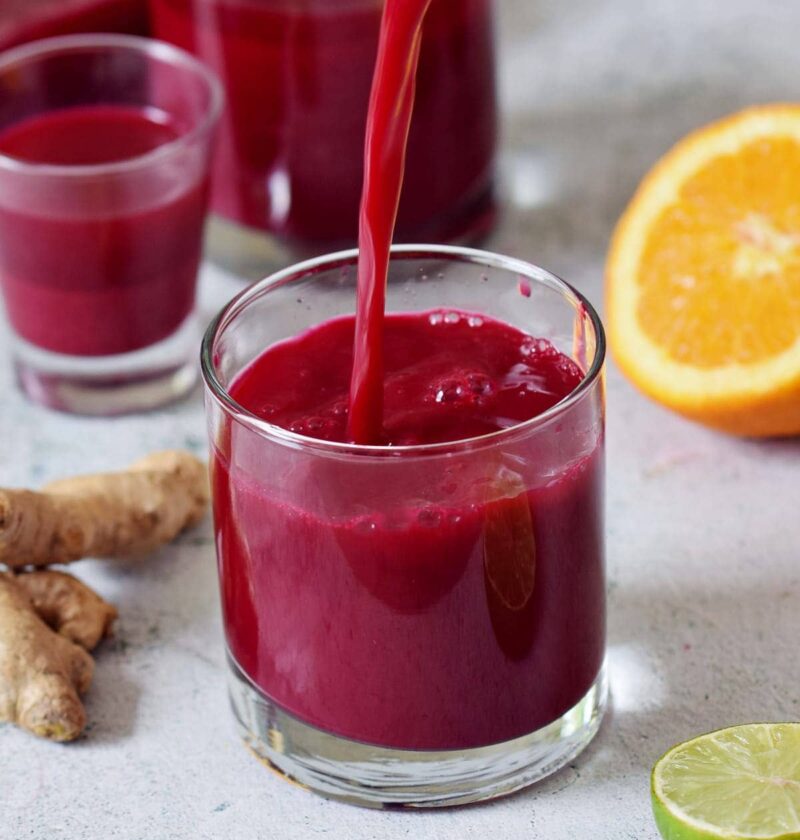
A Vibrant Green and Ruby-Red Juice Packed with Fresh Flavor
Looking for a refreshing way to enjoy more vegetables and fruit? This Cruciferous Power Beet Juice combines earthy beetroot, nutrient-rich kale, sweet apples, and zesty lime to create a colorful drink with a fresh, slightly sweet flavor.
Kale and broccoli belong to the cruciferous vegetable family. They contain glucosinolates, natural plant compounds that researchers study for their potential roles in health. Beetroot also contains naturally occurring nitrates, while apples add sweetness and lime provides a bright citrus taste.
This juice can be enjoyed as part of a balanced diet, including by people who want to add more variety to their meals during cancer care. However, no juice has been proven to treat or cure breast or lung cancer, and juicing should not replace meals or prescribed treatment.
🛒 Ingredients
- 1 small raw beetroot, peeled and chopped
- 1 cup fresh kale leaves or broccoli stalks, washed and chopped
- 2 sweet apples, cored and chopped
- 1 whole lime, peeled
- A little cold water, optional if using a blender
- Ice cubes, optional
👩🍳 How to Make Cruciferous Power Beet Juice
Step 1: Wash the Produce
Rinse the beetroot, kale or broccoli stalks, apples, and lime thoroughly under running water. Remove any damaged leaves and peel the beetroot.
Step 2: Prepare the Ingredients
Cut the beetroot and apples into pieces that fit your juicer. Remove the apple cores and peel the lime to help avoid excess bitterness.
Step 3: Juice the Greens First
Feed the kale leaves or broccoli stalks through the juicer first. Follow with the beetroot, lime, and apples. The juicy apples help push some of the remaining vegetable pulp through the machine.
Step 4: Mix and Taste
Stir the juice well. If the flavor is too earthy or bitter, try adding a little more apple or a squeeze of lime to balance it.
Step 5: Serve Fresh
Pour into a glass and serve immediately. Add ice if you prefer a chilled drink.
No Juicer? Use a Blender!
- Chop all the ingredients into small pieces.
- Add them to a blender with a little cold water.
- Blend until smooth.
- Strain through a fine-mesh sieve if you prefer a thinner drink.
- Serve fresh.
Keep in mind that straining removes much of the fiber, while blending and drinking the whole mixture retains more of it.
💚 Nutritional Highlights
- Kale or broccoli: Provides vitamins, fiber, and glucosinolates.
- Beetroot: Supplies natural nitrates and plant pigments called betalains.
- Apples: Add natural sweetness and some fiber, especially when blended without straining.
- Lime: Adds vitamin C and a refreshing citrus flavor.
Cruciferous vegetables are nutritious additions to a balanced eating pattern. Although their plant compounds are being studied for possible health effects, this recipe should not be described as a targeted treatment for breast cancer, lung cancer, or damaged tissues.
📊 Estimated Nutritional Information
The following estimates are for the full recipe made with kale and two medium apples. Actual values will vary with ingredient size and whether the juice is strained.
| Nutrient | Approximate amount |
|---|---|
| Calories | 250 kcal |
| Protein | 5 g |
| Total Carbohydrates | 61 g |
| Dietary Fiber | 11 g |
| Total Sugars | 42 g |
| Total Fat | 2 g |
| Vitamin C | 70–100 mg |
| Potassium | 1,000–1,300 mg |
Important: These figures are estimates for the whole mixture, not a laboratory-tested nutrition analysis. If you use a juicer and discard the pulp, fiber will be much lower. The amount of juice produced will also affect the nutrition per glass.
💡 Tips for the Best Flavor
- Start with kale: Its flavor is usually milder than some other greens when combined with sweet apples.
- Choose sweet apples: Gala or Fuji apples can help balance the earthy beetroot taste.
- Use lime carefully: Add less at first if you prefer a milder citrus flavor.
- Drink it fresh: Fresh juice generally tastes best soon after preparation.
- Avoid excessive straining: If you tolerate it, keeping the pulp provides more fiber.
🧊 Storage Instructions
Fresh juice is best consumed soon after preparation. If you need to store it, place it in a clean, airtight container and refrigerate promptly. Drink it within 24 hours for the best quality.
Wash produce carefully and use clean equipment. People receiving cancer treatment that weakens their immune system should ask their oncology team whether freshly prepared, unpasteurized juice is safe for them.
❓ Frequently Asked Questions
1. Is this beet juice good for breast cancer patients?
It can provide vegetables, fruit, and plant nutrients as part of an appropriate diet. However, there is no reliable evidence that this particular juice prevents, treats, or cures breast cancer.
2. Can this juice support lung health?
It provides nutrients from fruit and vegetables, but it has not been proven to repair lung tissue or treat lung cancer. Anyone with lung disease should follow their healthcare team’s advice.
3. What are glucosinolates?
Glucosinolates are natural compounds found in cruciferous vegetables such as kale, broccoli, and cabbage. Researchers are studying their breakdown products for possible biological effects, but eating this juice should not be considered cancer therapy.
4. Can I drink this juice every day?
Whether daily juice is appropriate depends on your overall diet and health needs. Whole vegetables and fruits usually provide more fiber and can be more filling than strained juice.
5. Is this juice suitable during cancer treatment?
Not everyone receiving cancer treatment has the same nutritional needs or food-safety restrictions. Ask your oncology team or registered dietitian before drinking raw, unpasteurized juice, particularly if your immune system is weakened.
❤️ Final Thoughts
The Cruciferous Power Beet Juice is a colorful blend of beetroot, kale or broccoli stalks, apples, and lime. Its natural sweetness and fresh citrus flavor make it an enjoyable way to include a variety of plant foods in your diet.
For people living with breast or lung cancer, nutrition can be an important part of supportive care. Enjoy this juice only if it fits your individual needs, and remember that it complements—not replaces—medical treatment and professional nutrition advice.