
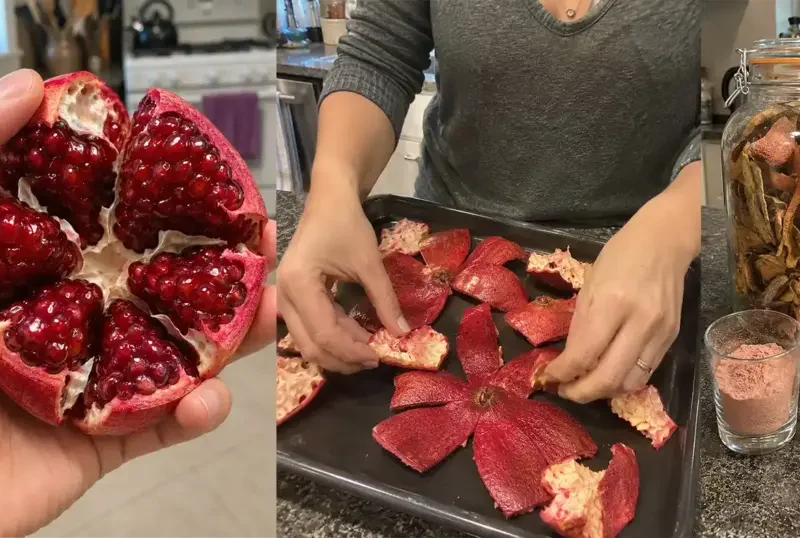
Most people enjoy the juicy red seeds of a pomegranate and throw away the outer peel. However, the peel contains useful natural compounds, including antioxidants and tannins. Instead of wasting it, you can save the peel and use it in a few simple homemade preparations.
Pomegranate peel has been used in traditional home remedies for many years. Today, researchers are also studying its plant compounds and possible benefits. However, it is important to remember that more research is needed before claiming that it can treat health problems.
In this guide, you will learn about pomegranate peel, how to prepare its powder at home, and some common ways people use it.
What Makes Pomegranate Peel Special?
Pomegranate peel contains several natural compounds that make it interesting from a nutritional and research point of view.
1. Antioxidants
The peel contains plant antioxidants, including punicalagin and other polyphenols. These compounds help protect cells from damage caused by unstable molecules called free radicals.
2. Natural Tannins
Tannins are plant compounds that create a slightly bitter taste. They also have a natural astringent effect, which means they can make tissues feel tighter.
3. Plant-Based Compounds
Pomegranate peel contains different polyphenols that researchers are studying for their antioxidant and other biological activities.
4. Vitamin C
Pomegranates contain vitamin C, although the amount in the peel can vary depending on the fruit and how it is stored or prepared. Drying and heating may also reduce some vitamin C.
Possible Benefits of Pomegranate Peel
Pomegranate peel is used in traditional preparations for different purposes. Some early research looks promising, but many claimed benefits have not been confirmed through strong human studies.
1. Supports Digestive Health
Pomegranate peel has traditionally been used in preparations for mild digestive discomfort. Its tannins and other plant compounds are being studied for their effects on the digestive system.
However, it should not be used as a replacement for proper treatment, especially if you have ongoing diarrhea, stomach pain, or other digestive problems.
2. Contains Skin-Friendly Antioxidants
The antioxidants found in pomegranate peel have attracted attention in skincare research. They may help protect skin cells from oxidative stress.
Some people use peel powder in homemade face masks, but there is not enough evidence to say that it removes wrinkles or treats skin conditions.
3. May Support Oral Hygiene
Pomegranate peel extracts have shown antibacterial activity in some laboratory studies. Researchers are exploring their possible use in oral care products.
However, homemade pomegranate peel water is not a proven replacement for brushing, flossing, or dentist-recommended mouthwash.
4. May Help With Scalp Care
Some traditional hair preparations include pomegranate peel. Its plant compounds are being studied, but there is not enough reliable evidence that peel powder stops hair loss or treats dandruff.
If you have an itchy or flaky scalp, use a suitable hair product or ask a healthcare professional for advice.
5. Contains Compounds Being Studied for Inflammation
Laboratory research suggests that certain pomegranate peel compounds may have anti-inflammatory activity. More human research is needed to understand whether these effects provide meaningful health benefits.
How to Make Pomegranate Peel Powder at Home
Making pomegranate peel powder is simple. The most important thing is to clean the fruit properly and dry the peel completely before grinding it.
Step 1: Wash the Pomegranate
Wash the outside of the fruit under clean running water. Gently scrub the surface to remove dirt and other unwanted material. Avoid using soap or household cleaning products.
Step 2: Remove the Seeds
Cut the pomegranate carefully and remove the red seeds. You can enjoy them fresh or save them for another recipe.
Separate the outer peel from the fruit. Remove as much of the white inner layer as you prefer, especially if you want a less bitter powder.
Step 3: Cut the Peel Into Small Pieces
Cut the peel into thin strips or small pieces. This helps it dry more evenly and makes grinding easier.
Step 4: Dry the Peel Completely
You can use one of these methods:
- Sun drying: Arrange the pieces in a single layer on a clean tray. Cover them with a clean, breathable cloth and keep them in a dry, sunny place. Bring them indoors if the weather becomes damp.
- Oven drying: Place the pieces on a baking tray and dry them at a low temperature, around 60°C (140°F), checking regularly.
- Food dehydrator: Follow your dehydrator’s instructions and use a suitable low-temperature setting.
The peel should become hard and brittle. If it still feels soft or contains moisture, continue drying it.
Step 5: Grind Into Powder
Once the peel is completely dry, place it in a clean coffee grinder or food processor. Grind it until you get a fine powder.
You can sift the powder if you want a smoother texture.
Step 6: Store It Properly
Transfer the powder into a clean, completely dry, airtight glass jar. Keep it in a cool, dark, dry cupboard.
Label the jar with the preparation date. Check it regularly and throw it away if you notice moisture, mold, an unusual smell, or any change in appearance. Do not assume homemade powder will remain safe for six months without checking its condition.
6 Simple Ways to Use Pomegranate Peel Powder
Pomegranate peel powder can be used in a few homemade preparations. These recipes are traditional or cosmetic uses, not proven medical treatments.
1. Pomegranate Peel Tea
This is a simple way to prepare a warm drink using dried pomegranate peel.
Ingredients:
- 1 cup water
- A small pinch of pomegranate peel powder
- Honey or lemon, optional
Instructions:
- Bring the water to a boil.
- Add a small pinch of peel powder.
- Let it steep for about 5 minutes.
- Strain the liquid through a fine sieve.
- Add a little honey or lemon if desired.
Pomegranate peel tea can taste quite bitter. Avoid drinking it regularly as a health treatment because safe internal doses have not been established.
2. Homemade Pomegranate Face Mask
This simple mask combines pomegranate peel powder with yogurt and honey.
Ingredients:
- 1 tablespoon pomegranate peel powder
- 1 tablespoon plain yogurt
- 1 teaspoon honey
Instructions:
- Add all the ingredients to a small bowl.
- Mix until you get a smooth paste.
- Apply a thin layer to clean skin, avoiding the eyes and lips.
- Leave it on for 5–10 minutes the first time.
- Rinse gently with lukewarm water.
Do a patch test before using it on your face. Stop immediately if you experience burning, redness, or itching. Do not apply it to broken or irritated skin.
3. Pomegranate Peel Water for Oral Rinsing
Some traditional preparations use pomegranate peel water as a mouth rinse.
Ingredients:
- 1 cup water
- A small amount of dried pomegranate peel
Instructions:
- Boil the water and add a small piece of dried peel.
- Allow it to simmer briefly.
- Let the liquid cool completely.
- Strain it carefully.
Do not swallow the mixture. Also, remember that homemade peel water is not a substitute for regular oral hygiene or a dentist-recommended mouthwash.
4. Scalp Care Preparation
Some people include pomegranate peel in homemade scalp treatments, although its effect on dandruff and hair growth has not been established.
If you want to try a topical preparation, mix a very small amount of peel powder with a plain, fragrance-free carrier oil. Test it on a small area first and wash it off if irritation develops.
Avoid using it on a damaged or inflamed scalp.
5. Simple Pomegranate Peel Paste
You can make a small paste for external use.
Ingredients:
- ½ teaspoon pomegranate peel powder
- A little clean water
Instructions:
- Put the powder in a small bowl.
- Add water slowly until a thick paste forms.
- Test it on a small area of skin first.
- Rinse it off if you notice any discomfort.
Do not use this paste as an acne treatment. Persistent or painful acne may need proper skincare or medical treatment.
6. Honey and Pomegranate Peel Mixture
Some traditional recipes combine pomegranate peel powder with honey.
However, there is not enough evidence to show that swallowing this mixture treats coughs or sore throats. Honey alone may help soothe a cough in some adults and children over one year old, but it should not be given to babies under 12 months.
Important Safety Tips
Pomegranate peel is natural, but that does not mean every homemade preparation is safe for everyone.
- Avoid excessive consumption: There is no well-established safe daily dose for homemade pomegranate peel powder. Large amounts may cause digestive discomfort.
- Clean the fruit properly: Wash the outer surface under running water before cutting it.
- Do a patch test: Test any homemade skin preparation on a small area before applying it more widely.
- Watch for allergies: Stop using the preparation if you notice itching, swelling, redness, or irritation.
- Be careful during pregnancy or breastfeeding: Avoid consuming concentrated peel preparations unless your healthcare professional says they are suitable.
- Consider medications: If you take regular medication or have an ongoing health condition, ask a healthcare professional before using pomegranate peel internally.
- Do not replace medical treatment: Pomegranate peel powder has not been proven to cure acne, stop hair loss, treat infections, or control digestive diseases.
Frequently Asked Questions
1. Can I make pomegranate peel powder at home?
Yes. Wash the fruit, remove the peel, cut it into small pieces, dry it completely, and grind it into a fine powder.
2. How should I store pomegranate peel powder?
Keep it in a clean, airtight, dry glass jar in a cool and dark place. Discard it if you notice mold, moisture, or an unusual smell.
3. Can I use pomegranate peel powder on my face?
Some people use it in homemade face masks. However, it may irritate sensitive skin, so always perform a patch test first.
4. Does pomegranate peel help with dandruff?
There is not enough reliable human research to confirm that it treats dandruff. Use proven scalp-care products if you have persistent flakes or itching.
5. Can I drink pomegranate peel tea every day?
The safe amount and long-term effects of homemade pomegranate peel tea are not well established. It is best not to use it as a daily health treatment without professional advice.
6. Is pomegranate peel better than the seeds?
Both parts contain useful plant compounds, but they have different nutritional properties. The peel is rich in certain polyphenols, while the seeds provide fiber and other nutrients. Neither needs to be considered better than the other.
Final Thoughts
Pomegranate peels are often thrown away, but they contain natural plant compounds that are worth learning about. With a little preparation, you can turn clean, dry peels into homemade powder for traditional recipes and occasional external use.
Still, it is important to separate traditional uses from proven health benefits. Pomegranate peel is not a cure for skin, digestive, dental, or hair problems. Use it carefully, pay attention to your skin and body’s response, and seek proper medical advice when needed.