Most people know aloe vera for its thick green leaves and soothing gel. It is commonly used in skincare products to moisturize dry skin and soothe minor skin irritation.
But have you ever noticed the flowers that grow on a mature aloe vera plant?
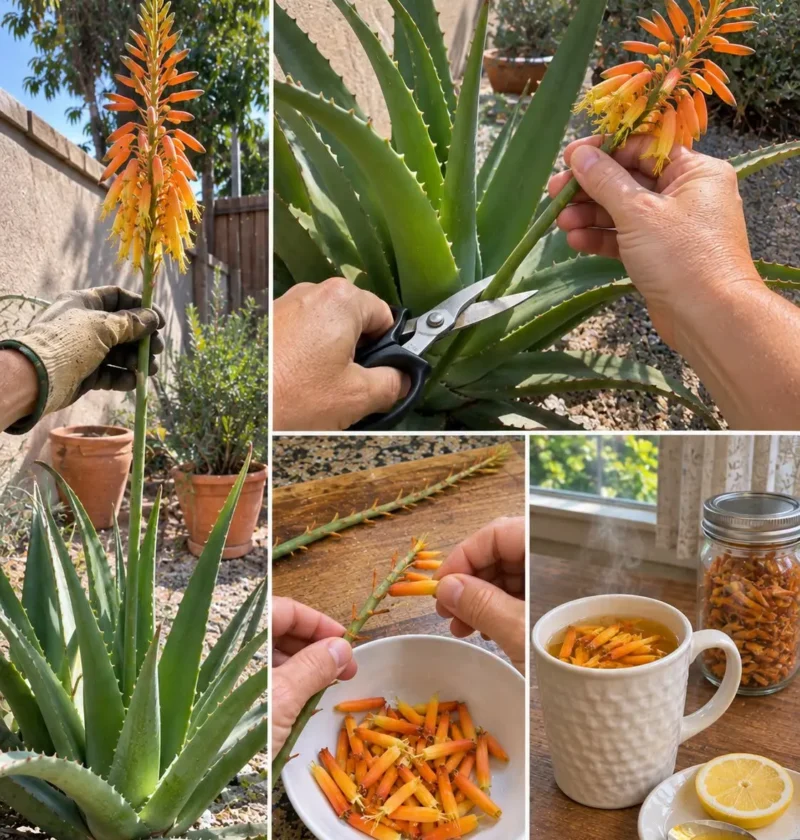
Aloe vera produces a tall flower stalk with small, tube-shaped flowers. Depending on the plant, these flowers may be yellow, orange, or reddish in color. They look beautiful, but many people know very little about them.
Like other parts of the plant, aloe flowers contain natural compounds that have attracted scientific interest. However, research on their benefits is still limited. They should not be considered a proven treatment for digestive problems, skin conditions, or other health issues.
Let’s look at what makes aloe vera flowers interesting, how to harvest them, and some simple ways to use them safely.
What Makes Aloe Vera Flowers Interesting?
Aloe vera is known for containing different natural plant compounds. Researchers have studied the leaves extensively, but the flowers have received much less attention.
Here are some areas of interest:
1. Natural Plant Compounds
Aloe flowers contain plant chemicals that researchers may investigate for their biological properties. However, their exact composition can vary depending on the aloe species and growing conditions.
2. Antioxidant Potential
Some plant extracts contain antioxidant compounds. These substances are studied because they may help protect cells from oxidative damage. More research is needed to understand the antioxidant activity of aloe flowers specifically.
3. Traditional Plant Uses
Aloe has a long history in traditional medicine. However, the uses of aloe leaf gel should not automatically be applied to its flowers. Different parts of the plant can have different properties.
Possible Uses of Aloe Vera Flowers
Aloe vera flowers are sometimes included in traditional herbal preparations and homemade skincare ideas. However, there is not enough reliable human research to confirm that they provide the following health benefits.
1. Antioxidant Research
Aloe plants contain several natural compounds that scientists study for their antioxidant properties.
Antioxidants are substances that help protect cells from oxidative stress. However, it has not been established that consuming aloe flowers provides meaningful antioxidant benefits in humans.
2. Traditional Digestive Use
Some traditional herbal practices use different parts of aloe for digestive complaints.
However, aloe flower tea has not been proven to improve digestion, reduce bloating, or treat stomach problems. It is important not to confuse aloe flowers with aloe leaf latex, which contains laxative compounds and can cause serious digestive side effects.
3. Possible Skincare Applications
Aloe vera leaf gel is widely used in skincare products because of its moisturizing properties.
Aloe flowers have not been studied nearly as much. Their use in homemade oils or sprays should therefore be treated as a cosmetic experiment rather than a proven skin treatment.
4. Plant Compounds and General Health
Aloe plants contain different natural compounds that are being investigated by researchers.
However, there is no strong human evidence that eating aloe flowers boosts immunity or prevents infections. A balanced diet, adequate sleep, and regular physical activity remain more reliable ways to support general health.
How to Harvest Aloe Vera Flowers
If you have a mature aloe vera plant, you may want to collect its flowers for decorative or educational purposes.
Follow these simple steps:
Step 1: Identify the Plant
Make sure the plant is correctly identified as Aloe vera (Aloe barbadensis Miller). Many aloe-like plants look similar, and not all are suitable for the same uses.
Do not eat or prepare flowers from an unidentified garden plant.
Step 2: Wait Until the Flowers Open
A mature aloe plant usually produces a tall flower stalk. The flowers may appear in clusters and open gradually.
For decorative use, choose fresh flowers that look healthy and are free from visible damage.
Step 3: Cut the Flower Stalk Carefully
Use clean, sharp garden scissors or pruning shears. Cut the flower stalk carefully without damaging the leaves.
Avoid contact with the yellow sap that may come from cut aloe leaves.
Step 4: Clean the Flowers
Gently rinse the flowers with clean running water to remove dust and insects.
Place them on a clean towel and allow them to dry naturally.
Step 5: Separate the Flowers
If you are using the flowers for decoration or observation, gently remove the individual flowers from the stalk.
Do not assume that washing or drying makes them safe to eat.
3 Homemade Aloe Vera Flower Ideas
The following ideas are suitable as decorative or cosmetic projects. They are not proven medical treatments. Use only correctly identified plants, and avoid preparations that may become contaminated.
1. Aloe Vera Flower Tea: Important Caution
Aloe flower tea is mentioned in some traditional herbal practices. However, there is not enough reliable safety information to recommend a drinking recipe or daily amount.
Aloe leaf latex can contain aloin and related compounds that have strong laxative effects. These substances can cause cramps, diarrhea, and other problems.
For this reason, do not prepare aloe flower tea for regular consumption or use it to treat digestive problems without professional advice.
2. Aloe Flower Decorative Infused Oil
You can make a decorative botanical oil using properly dried flowers. However, there is no good evidence that aloe flowers provide special skincare benefits when infused in oil.
Ingredients:
- A small amount of fully dried, correctly identified aloe flowers
- A suitable cosmetic carrier oil, such as jojoba oil
- A clean, completely dry glass jar
- A clean strainer
- A dark glass bottle
Instructions:
- Make sure the flowers are completely dry. Fresh flowers contain water and can increase the risk of spoilage.
- Place the dried flowers in a clean, dry glass jar.
- Add enough carrier oil to cover the flowers.
- Close the jar and label it with the date.
- For a safer cosmetic project, follow a suitable botanical infusion method rather than assuming that leaving the jar in sunlight for several weeks makes it safe.
- Strain the oil using clean equipment.
- Transfer it into a clean bottle.
How to use:
Before applying any homemade botanical oil, test a small amount on an area of healthy skin. Stop using it if you notice itching, redness, or irritation.
Do not apply it to broken skin, wounds, or around the eyes. Discard it if its smell, color, or appearance changes.
3. Aloe Flower Decorative Water Spray
Fresh aloe flowers can be used to make a simple botanical display or scented-water experiment. However, homemade flower water is not a proven moisturizer or skin treatment.
Ingredients:
- A few clean, correctly identified aloe flowers
- A small amount of distilled water
- A clean glass container
Instructions:
- Place the flowers in a clean glass container.
- Add distilled water for a decorative botanical preparation.
- Cover the container and keep it refrigerated.
- Do not add this mixture to your regular skincare routine.
- Discard it if it becomes cloudy, develops an unusual smell, or shows signs of contamination.
Water-based homemade mixtures have no preservatives and can support microbial growth. Refrigeration does not guarantee safety.
Important Safety Precautions
Aloe vera is a familiar household plant, but not every part of it is suitable for eating or applying to the skin.
Keep these safety points in mind:
- Identify the plant correctly: Do not use flowers from an aloe-like plant unless its identity is certain.
- Avoid yellow latex: The yellow sap found beneath the outer leaf skin contains aloin and related compounds. It can cause severe diarrhea and stomach cramps.
- Do not assume flowers are edible: The safety of consuming aloe vera flowers has not been properly established.
- Be careful with pregnancy: Avoid consuming homemade aloe preparations during pregnancy or breastfeeding unless a qualified healthcare professional advises otherwise.
- Watch for skin reactions: Aloe products can cause irritation or allergic reactions in some people.
- Consider medications: Ask a healthcare professional before using aloe preparations if you take regular medication or have an ongoing health condition.
- Keep away from children and pets: Do not leave plant parts or homemade preparations where they can be swallowed accidentally.
If aloe sap gets into your eyes, rinse immediately with plenty of clean water and seek medical attention.
Frequently Asked Questions
1. What color are aloe vera flowers?
Aloe vera flowers are commonly yellow, orange, or reddish-orange. Their color can vary depending on the plant.
2. When does aloe vera produce flowers?
A mature aloe vera plant may produce flowers when growing conditions are suitable. Flowering time depends on the climate, season, and health of the plant.
3. Can aloe vera flowers be used for tea?
They are mentioned in some traditional preparations, but their safety and benefits when consumed have not been established. Regular drinking is not recommended without professional advice.
4. Are aloe vera flowers good for the skin?
There is not enough research to confirm special skincare benefits from aloe flowers. Aloe leaf gel is much better studied and is commonly used in skincare products.
5. Can I make aloe vera flower oil at home?
You can make a botanical oil infusion as a cosmetic experiment using fully dried flowers and a suitable carrier oil. However, it is not a proven treatment for dry skin or other skin conditions.
6. Is aloe vera flower the same as aloe vera gel?
No. Aloe gel comes from the clear inner part of the leaf, while the flowers grow on a separate stalk. They have different compositions and should not be used interchangeably.
Final Thoughts
Aloe vera is more interesting than many people realize. While its thick green leaves are widely known, its bright flowers are another part of the plant worth learning about.
The flowers contain natural plant compounds, but their health benefits and safety have not been studied enough to support strong medical claims.
You can enjoy aloe flowers in your garden, learn how to identify them, and explore simple decorative botanical projects. Just remember that natural ingredients are not always safe to eat or apply to the skin. When it comes to homemade remedies, careful use and reliable information matter most.