Guava is well known for its sweet taste and nutritional value, but the fruit is not the only part of the plant that has attracted attention. Guava leaves have been used in traditional wellness practices for generations, often prepared as a simple herbal tea.
These leaves contain natural plant compounds, including polyphenols and flavonoids, that researchers are studying for their potential health effects. Guava leaf tea is also naturally caffeine-free, making it an alternative to traditional tea and coffee.
But what are its possible benefits, how do you prepare it at home, and what precautions should you know about? Let’s explore everything you need to know about this traditional herbal drink.
What Makes Guava Leaves Special?
Guava leaves come from the Psidium guajava plant. Unlike the fruit, which is known for its vitamin C and fiber, the leaves contain a different combination of plant compounds.
Some of these compounds have shown antioxidant and other biological activities in laboratory studies. Researchers are also investigating guava leaf extracts for their possible effects on digestion and blood sugar regulation.
However, research on guava leaf tea in humans remains limited. Results from concentrated extracts or laboratory experiments do not necessarily apply to homemade tea, and more studies are needed to establish its benefits and safe dosage.
5 Potential Benefits of Guava Leaf Tea
Guava leaf tea has several traditional uses, and researchers continue to explore its possible health effects. Here are five areas of interest.
1. May Support Digestive Health
Guava leaves have traditionally been used to help manage digestive discomfort, including diarrhea. Some preliminary studies suggest that compounds in guava leaves may affect processes involved in intestinal function.
However, evidence for guava leaf tea itself is limited, and it should not replace appropriate treatment for persistent diarrhea or other digestive problems.
If diarrhea is severe, bloody, or accompanied by signs of dehydration, seek medical advice promptly.
2. Contains Antioxidant Compounds
Guava leaves contain polyphenols and flavonoids, which are plant compounds with antioxidant activity.
Antioxidants help protect cells against oxidative damage. Eating a variety of fruits, vegetables, legumes, and other plant foods is a well-established way to obtain beneficial dietary compounds.
Although guava leaf tea contains some plant compounds, its overall effects on human health have not been fully established.
3. May Influence Blood Sugar Levels
One area of research involves the potential effects of guava leaf preparations on blood glucose. Some studies suggest that guava leaf tea or extracts may affect how the body processes carbohydrates.
However, these findings do not establish guava leaf tea as a treatment for diabetes. Its effects can vary, and the appropriate amount for safe use has not been established.
People taking insulin or diabetes medications should speak with a healthcare professional before drinking it regularly because of the possibility of interactions or changes in blood glucose.
4. May Complement a Healthy Weight Management Plan
Guava leaf tea is naturally caffeine-free and can be enjoyed without added sugar. Choosing unsweetened drinks instead of sugary beverages may help reduce overall calorie intake.
However, there is not enough strong evidence to conclude that guava leaf tea directly burns fat or causes weight loss.
For healthy weight management, focus on balanced meals, suitable portion sizes, regular physical activity, and adequate sleep.
5. Contains Compounds Being Studied for Skin Health
The antioxidant and other biological properties of guava leaf compounds have attracted interest in skin-related research.
Nevertheless, there is limited clinical evidence that drinking guava leaf tea improves skin appearance or treats skin conditions. It should not replace proven skincare practices or medical treatment when needed.
How to Make Guava Leaf Tea at Home
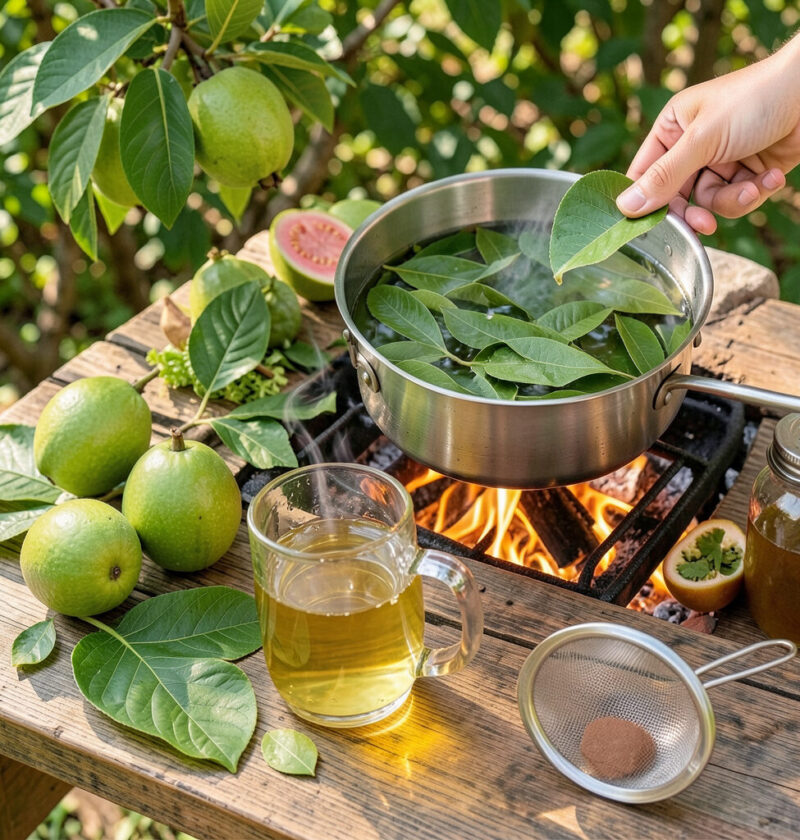
Preparing guava leaf tea is simple and requires only a few basic kitchen items. The flavor is usually mild to earthy, with a slightly herbal taste that becomes stronger when more leaves are used or the tea is simmered for longer.
Ingredients
- 5–10 fresh guava leaves from a reliably identified, untreated plant
- 4 cups of clean water
- A small cooking pot
- A fine-mesh strainer
- A mug or heat-resistant cup
Optional additions:
- A small slice of lemon
- A little honey, if desired
These ingredient quantities provide a basic traditional preparation, not a medically established dose.
Step-by-Step Instructions
Step 1: Select fresh leaves
Choose healthy-looking green guava leaves from a plant that has not been treated with pesticides or exposed to harmful pollutants.
Step 2: Wash the leaves thoroughly
Rinse the leaves under clean running water to remove dust, soil, and other surface debris. Discard any leaves that look moldy, damaged, or contaminated.
Step 3: Bring the water to a boil
Pour four cups of clean water into a pot and bring it to a boil over medium-high heat.
Step 4: Add the guava leaves
Place the washed leaves into the boiling water. Reduce the heat to a gentle simmer.
Step 5: Simmer for 10–15 minutes
Allow the leaves to simmer gently. The water may develop a light yellow-green or brownish color, depending on the leaves and preparation method.
Avoid making the tea excessively concentrated in an attempt to increase its effects.
Step 6: Strain the tea
Remove the pot from the heat and carefully pour the liquid through a fine-mesh strainer into a clean, heat-resistant container.
Step 7: Serve and enjoy
Allow the tea to cool to a comfortable drinking temperature. Enjoy it plain, or add a little lemon or honey for flavor.
You can also refrigerate the tea for a chilled drink. Refrigerate it promptly in a clean, covered container and discard it if its appearance or smell changes.
Helpful Tips for Preparing Guava Leaf Tea
- Use clean leaves: Avoid leaves collected beside busy roads or from plants sprayed with chemicals.
- Start cautiously: If you choose to try guava leaf tea, begin with a small amount and pay attention to any unwanted symptoms.
- Keep it simple: Drinking it without added sugar is a good option if you are limiting your sugar intake.
- Do not assume more is better: The safest amount and long-term effects of regular consumption have not been established.
- Use dried leaves carefully: Dried leaves may differ in strength and flavor from fresh ones. There is no universally established conversion or medicinal dose.
Important Safety Considerations
Although guava leaves have a history of traditional use, natural products can still cause unwanted effects or interact with medicines.
Consider the following precautions before making guava leaf tea a regular part of your routine:
- Diabetes: Consult your healthcare professional before using guava leaf tea regularly, particularly if you take medication to lower blood sugar.
- Pregnancy and breastfeeding: There is insufficient safety information to recommend medicinal use during pregnancy or breastfeeding.
- Existing medical conditions: Speak with a healthcare professional if you have a chronic illness or are receiving ongoing treatment.
- Medication use: Ask a doctor or pharmacist about possible interactions before combining herbal preparations with prescribed medicines.
- Allergic reactions: Stop drinking the tea if you develop itching, a rash, swelling, or other concerning symptoms.
Guava leaf tea should not replace prescribed medication or professional treatment for diabetes, digestive conditions, or any other health problem.
Frequently Asked Questions
How often can I drink guava leaf tea?
There is not enough reliable evidence to establish a safe daily amount or confirm the long-term safety of regular consumption. If you plan to drink it frequently, consult a healthcare professional, especially if you take medication.
Is guava leaf tea caffeine-free?
Yes. Guava leaves do not naturally contain caffeine, so tea prepared from them is generally caffeine-free.
Can I use dried guava leaves?
Yes, dried guava leaves are used in some traditional preparations. However, their strength may vary depending on how they were harvested and stored. Follow reliable preparation guidance and avoid assuming that dried and fresh leaves have identical effects.
Can guava leaf tea help control diabetes?
Some research has investigated guava leaf preparations for their potential effects on blood glucose. However, the evidence is not strong enough to recommend the tea as a diabetes treatment. Never stop or adjust prescribed diabetes medication without medical advice.
Is guava leaf tea good for weight loss?
There is no strong evidence that guava leaf tea directly causes weight loss. Unsweetened tea can be a useful alternative to sugary drinks, but sustainable weight management depends on overall dietary habits, activity, sleep, and other factors.
Can I drink guava leaf tea before bed?
Because guava leaf tea is naturally caffeine-free, it may be suitable as an evening beverage for many adults. However, individual tolerance varies, and its safety for regular medicinal use has not been fully established.
Final Thoughts
Guava leaves are more than an overlooked part of a familiar fruit tree. They contain natural plant compounds that have attracted scientific interest and have a long history of use in traditional herbal practices.
Making guava leaf tea at home is relatively simple, and its caffeine-free nature makes it an alternative to conventional tea. However, its potential health benefits—particularly for blood sugar, digestion, and skin health—should be viewed cautiously because more high-quality human research is needed.
If you decide to try it, use clean leaves, avoid excessive or concentrated preparations, and consult a healthcare professional if you have a medical condition or take medication.
The best approach to natural wellness is to combine informed choices with a balanced diet, healthy daily habits, and evidence-based medical care.