
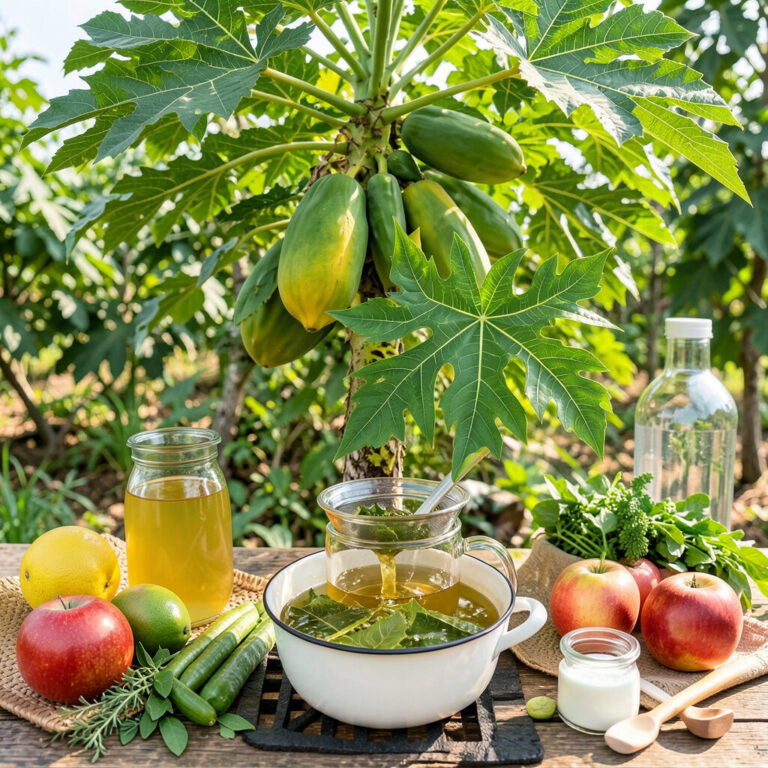
Beyond the Fruit: The Power of Papaya Leaves
When people think of papaya, they usually picture its sweet, tropical fruit. But papaya leaves have also been used in traditional herbal practices for many years. These green leaves contain several natural plant compounds that researchers are studying for their possible health effects.
One popular way to prepare papaya leaves is by making herbal tea. It has an earthy, slightly bitter taste and requires only a few basic ingredients.
In this guide, you will learn how to prepare papaya leaf tea at home, explore its potential benefits, and understand the safety precautions to consider before drinking it.
What Makes Papaya Leaves Special?
Papaya leaves come from the Carica papaya plant. They contain various plant compounds, including flavonoids, phenolic compounds, and alkaloids. They also contain enzymes such as papain, although the amount of active enzyme that remains in tea can vary with preparation.
These compounds have attracted scientific interest because some have antioxidant or other biological activities in laboratory studies. However, research on papaya leaf tea in humans is limited, and many claims about its health benefits have not been firmly established.
Papaya leaves have a long history of traditional use, but traditional use alone does not prove that a remedy is safe or effective for a particular condition.
Potential Benefits of Papaya Leaf Tea
Papaya leaf tea is sometimes used as part of traditional wellness practices. Here are some of its potential benefits and what you should know about the available evidence.
1. Contains Antioxidant Compounds
Papaya leaves contain plant compounds, including flavonoids and phenolics, that show antioxidant activity in laboratory research. Antioxidants help protect cells from damage caused by unstable molecules known as free radicals.
However, the effects of drinking papaya leaf tea on human health have not been clearly established. A varied diet containing fruits, vegetables, and other plant foods remains a more reliable way to obtain a range of beneficial nutrients.
2. May Be Studied for Digestive Effects
Papaya is known for enzymes such as papain, which can break down proteins. However, the presence of these enzymes in papaya leaves does not mean that drinking leaf tea will necessarily improve digestion. Brewing conditions may also affect enzyme activity.
If you regularly experience bloating, stomach pain, or other digestive symptoms, it is best to discuss them with a healthcare professional rather than relying on herbal tea alone.
3. Has Potential Anti-Inflammatory Properties
Certain compounds found in papaya leaves have shown biological activity in preliminary laboratory studies. Researchers are investigating whether these compounds may have anti-inflammatory effects.
Still, there is not enough strong human evidence to recommend papaya leaf tea for treating inflammation, joint pain, or inflammatory diseases.
4. Is Being Studied for Immune-Related Effects
Some plant compounds found in papaya leaves are being studied for their effects on biological processes associated with immunity. However, this does not establish that papaya leaf tea strengthens the immune system or prevents infections.
For everyday immune health, focus on a balanced diet, adequate sleep, regular physical activity, and recommended vaccinations.
5. Has Been Investigated for Blood Platelet Support
Papaya leaf extract is often discussed in connection with platelet counts, particularly in people with dengue fever. Some clinical studies have investigated papaya leaf preparations for their potential effects on platelet levels.
However, evidence remains limited, and findings from specific extracts cannot automatically be applied to homemade papaya leaf tea. It should never replace medical assessment or treatment for dengue or other conditions associated with low platelet counts.
Important: If you have a fever, bleeding, severe abdominal pain, persistent vomiting, or signs of dengue, seek medical care promptly. Do not depend on papaya leaf tea as a treatment.
How to Make Papaya Leaf Tea at Home
Preparing papaya leaf tea is straightforward, but the strength and safety of homemade tea can vary depending on the leaves used and how they are prepared.
Ingredients
- A few fresh papaya leaves from a reliably identified plant
- 4 cups of clean water
- A clean pot
- A fine-mesh strainer
- A heat-resistant cup or container
Optional flavor additions include a little lemon juice or honey, if appropriate for your diet.
Instructions
Step 1: Select the leaves
Choose fresh-looking, green leaves from a papaya plant that has not been treated with pesticides or other chemicals unsuitable for food preparation.
Step 2: Wash thoroughly
Rinse the leaves carefully under clean running water to remove dirt and other surface debris.
Step 3: Cut the leaves
Tear or chop the washed leaves into smaller pieces using a clean knife and cutting board.
Step 4: Heat the water
Pour the water into a clean pot and bring it to a boil.
Step 5: Simmer the leaves
Add the prepared leaves and reduce the heat. Simmer gently for approximately 10–15 minutes, then remove the pot from the heat. This is a traditional preparation method, not a clinically validated dose or guarantee of safety.
Step 6: Strain the liquid
Allow the tea to cool enough to handle safely. Pour it through a clean strainer to remove the leaves.
Step 7: Serve carefully
Let the tea cool to a comfortable temperature before tasting it. Papaya leaf tea may have a strong, earthy, bitter flavor. A small amount of lemon or honey can change the taste, but it does not make the tea more medically effective.
There is no well-established standard serving size for homemade papaya leaf tea. Avoid preparing it extra strong or assuming that drinking more will provide greater benefits.
Tips for Preparing and Storing Papaya Leaf Tea
- Choose clean leaves: Avoid leaves from roadsides, sprayed gardens, or places where the plant may have been exposed to contaminants.
- Use clean equipment: Wash the pot, knife, cutting board, and strainer before preparing the tea.
- Avoid excessive amounts: The safety of frequent or long-term consumption has not been adequately established.
- Be careful with storage: If you prepare tea in advance, refrigerate it promptly in a clean, covered container. For the safest approach, prepare only what you plan to use soon and discard it if its smell, appearance, or texture changes.
- Do not confuse tea with extracts: Concentrated papaya leaf supplements and extracts may differ substantially from homemade tea in strength and composition.
Who Should Avoid Papaya Leaf Tea?
Papaya leaf tea is not suitable for everyone. Because its safety has not been well established, take particular care in the following situations.
- Pregnancy or breastfeeding: Avoid using papaya leaf preparations medicinally unless your healthcare professional specifically advises otherwise.
- Children: Do not give papaya leaf tea to children without advice from a qualified pediatric healthcare professional.
- Medication use: Ask a doctor or pharmacist before using it, especially if you take medicines for diabetes, blood clotting, or other ongoing conditions.
- Allergies: People who are allergic to papaya or related plant materials should avoid it.
- Existing medical conditions: Consult a healthcare professional before trying it if you have a chronic illness or are receiving medical treatment.
Possible adverse effects may include stomach discomfort or allergic reactions. Stop using it and seek medical advice if you develop concerning symptoms.
Frequently Asked Questions
Can I drink papaya leaf tea every day?
There is not enough evidence to establish a safe daily amount or confirm the long-term safety of homemade papaya leaf tea. Speak with a healthcare professional before making it a regular habit.
What does papaya leaf tea taste like?
It usually has an earthy, grassy, and bitter flavor. Lemon or a little honey may make it more pleasant, depending on your taste preferences.
Can papaya leaf tea increase platelet counts?
Some studies have investigated papaya leaf extracts for their possible effects on platelet counts, but the evidence is limited. Homemade tea is not a proven treatment for low platelets and should not replace medical care.
Is papaya leaf tea good for digestion?
Although papaya contains protein-digesting enzymes, it is not established that papaya leaf tea improves digestion. Persistent digestive symptoms should be evaluated by a healthcare professional.
Can children drink papaya leaf tea?
Its safety in children is not well established. Consult a pediatrician before giving it to a child.
Can I use dried papaya leaves instead of fresh leaves?
Dried leaves may be used in some traditional preparations, but drying can change the composition of the plant material. The strength and safety of tea made from dried leaves are not well established, so avoid assuming that fresh and dried leaves are interchangeable.
Final Thoughts
Papaya leaves have an interesting history in traditional herbal practices and contain plant compounds that researchers continue to investigate. Papaya leaf tea is relatively simple to prepare, but its potential health benefits should not be confused with proven medical effects.
If you are interested in trying this herbal drink, prioritize clean ingredients, use caution, and check with a healthcare professional if you take medication, have an ongoing health condition, or are pregnant or breastfeeding.
Most importantly, treat papaya leaf tea as an herbal preparation with uncertain benefits—not as a cure or a replacement for evidence-based medical care.